Climate Reality vs. Public Perception: Will Toxic Haze and the 2023 Danger Season Make a Difference?
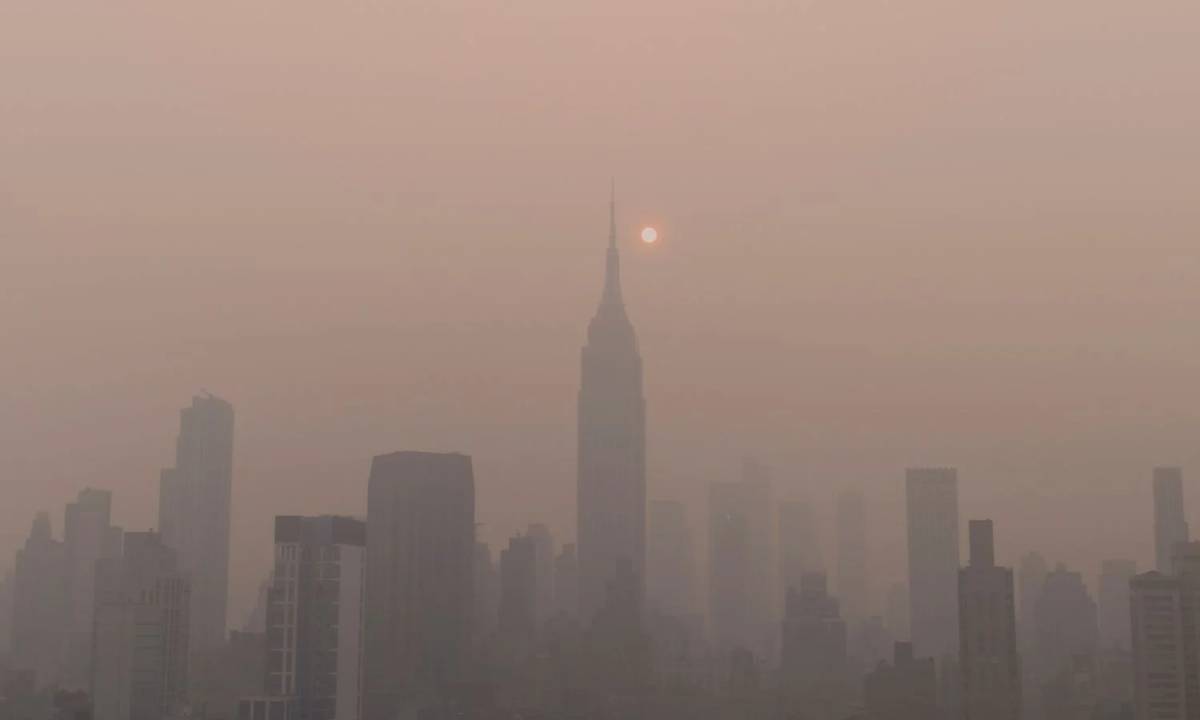
The year is only half done and the United States has already been enveloped by acrid orange skies in the East, battered by winter rains and floods in California, seared by record winter temperatures in the South, soaked by a record 26-inch April deluge in Fort Lauderdale, and broiled by record spring heat in the Pacific Northwest , Texas , and Puerto Rico .
The onslaught has led to another round of media headlines and press releases from environmental and public health groups asking whether the nation is at a tipping point of urgency to fight climate change.
A Los Angeles Times headline for reader letters on the floods said, “California rains are a wake-up call for climate upheaval to come.” Many other media outlets and advocacy groups, from Al Jazeera to the American Lung Association , speculated as to whether the recent smoke plumes may also be such a “wake-up call.”
A Vox headline on the orange skies from Canadian wildfires said, “Wildfire smoke reminded people about climate change. How soon will they forget?” A Washington Post story carried the headline : “How the Canadian wildfire smoke could shift Americans’ views on climate.” A Philadelphia Inquirer column carried the headline, “America sleepwalks through a climate crisis. Will this smoke alarm wake us up?”
So far, no alarm bell has been loud enough to stop the sleepwalking. Hurricane Katrina in 2005, Superstorm Sandy in 2012, Hurricanes Harvey and Irma in 2017, and Hurricane Irma in 2021 were all accompanied by the same question. After the 2021 “heat dome” that saw Portland, Oregon hit 116 degrees and Seattle soar to 106, a Los Angeles Times headline said: “Northwest heat wave swamped the vulnerable, was a harsh climate wake-up call.”
The usual and eventual response to such things was summed up in an Associated Press story five years after Superstorm Sandy. The headline was “5 years after Superstorm Sandy, the lessons haven’t sunk in.” It was about most plans for climate security in the New York City area being unrealized.
...A world of actual scientists can junk that lie. Fine particulate pollution, known as PM 2.5, kills between 4.2 million and 5.7 million people a year, according to a range of studies. More life years are lost around the globe from PM 2.5, according to the Energy Policy Institute at the University of Chicago, than from cigarette smoking or alcohol.
In the U.S., exposure to PM 2.5 prematurely kills at least 100,000 people a year. That is more than gun deaths and fatal car crashes combined. This is before considering a world with more wildfire smoke. Emergency room visits for asthma doubled in New York during the June plume, with most of the afflicted coming from Black, Latino, and high-poverty neighborhoods.