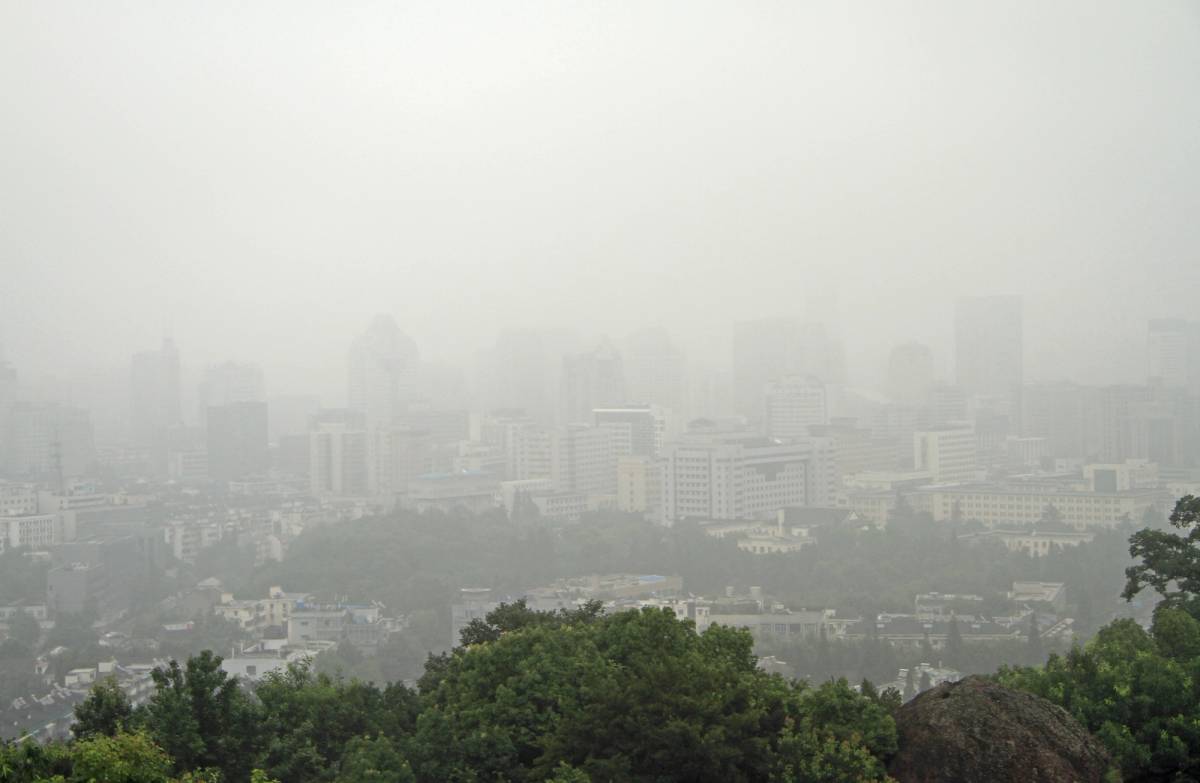
China's Bad Air: Can the Battle be Won?
Talk about the tyranny of low expectations: Chinese scientists have invented a new type of smart window screen capable of capturing smog, reducing the density of harmful fine particulate matter (PM2.5) within a room to safe limits within a minute. That such an invention is even necessary is telling of the paltry environmental protection guidelines observed in the country, as rapid industrialization is exceedingly coming at the expense of public health.Indeed, according to MIT researcher Siqi Zheng, there is a measurable negative correlation between reported levels of happiness and official pollution data. Furthermore, on smoggy days, people have been shown to be more at risk of short-term depression and anxiety. Thanks to social media data collected by Zheng’s team, the true social cost of China’s somber skies is coming to the fore.And for good reason. In real terms, China’s pollution causes 1.1 million premature deaths each year and costs the economy an estimated $38 billion. In many provinces, PM2.5 levels far exceed the global standard. In Shandong, citizens lose as much as five years from their life expectancy due to poor air quality.That’s why Chinese policymakers embarked on a “war on pollution” in 2013, a pledge that was more formally enshrined during the 19th National Congress in 2017, which announced measures to turn the Middle Kingdom into an “ecological civilization.” Some notable progress has been made since: according to satellite data tapped into by the Energy Policy Institute at the University of Chicago (EPIC), the Air Quality Life Index (AQLI) shows that PM2.5 levels across China were down 23 percent in 2016 compared to 2013 levels – although wind patterns might have played a hand too. Continue Reading at The International Policy Digest...