What India can learn from China’s approach to improving air quality
[Commentary] by Tanushree Ganguly
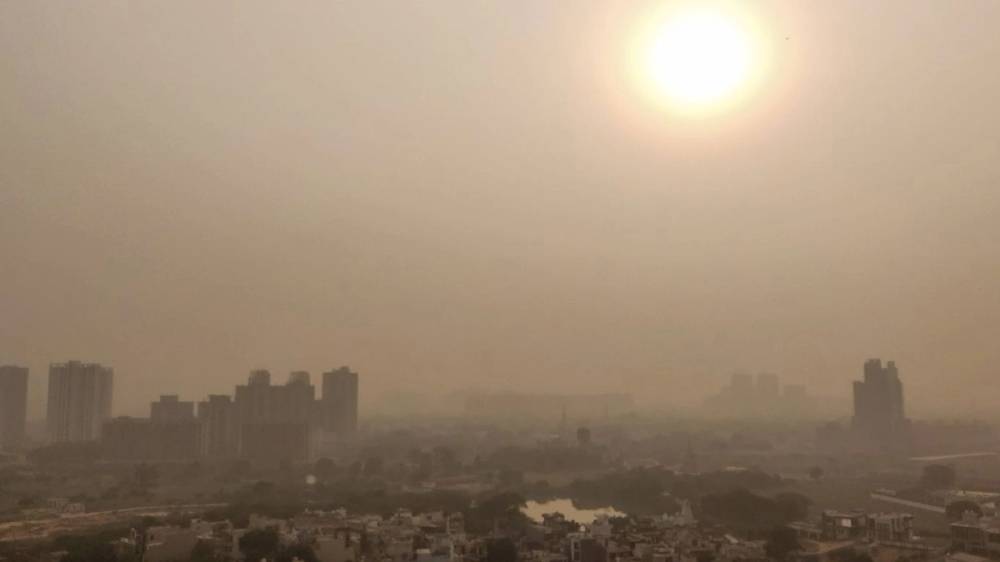
Cities in India, especially in the Delhi-National Capital Region, are once again facing severe air pollution. This has renewed interest in how China managed to control its pollution.
China reduced particulate pollution by nearly 40% not only through measures such as coal caps and vehicle standards, but also by redesigning its governance approach to pollution control.
China’s experience shows that lasting air quality improvement comes from aligning political priorities with scientific evidence, setting enforceable targets, ensuring transparency, and holding accountable.
The views in this commentary are that of the author.
I spent my winter break in Kolkata this year. Although I have worked on air pollution for nearly eight years, this was the first time my parents and neighbours remarked that they were relieved I had escaped Delhi’s toxic air. In previous years, their concern had always been whether I could cope with Delhi’s bitter winter cold. This year felt different, not just because of how bad the air was, but because the crisis was impossible to ignore. Delhi’s citizens took to the streets to demand action on clean air, and social media was abuzz with reels and memes on pollution. December, despite the drop in farm fires, turned out to be more polluted than October and November.
In the midst of all this, as Delhi was grappling with severe pollution levels in mid-December, the spokesperson for the Chinese embassy in India took to X (formerly Twitter) to offer help, sharing how China cleaned up its pollution. This, in turn, triggered a series of articles by air pollution experts in India, asking: China could clean up its air, why can’t India? Almost all of them point to the same set of measures — coal caps, industrial shutdowns, tighter vehicle emission standards, and the scrapping of older vehicles — adopted under China’s Air Pollution Prevention and Control Action Plan launched in 2013. And rightly so. Since 2013, China’s particulate pollution levels have declined by nearly 40% . We at the Air Quality Life Index (AQLI) estimate that this improvement could potentially help Chinese residents live two years longer. The AQLI is an index and interactive data visualisation platform developed by the Energy Policy Institute at the University of Chicago (EPIC).
But this focus on what China did often obscures a more critical question: How did those actions lead to reduced pollution? The real lesson for India lies less in the specific measures themselves and more in the principles that shaped these measures and made them effective.
Tracing the history of air pollution control and broader environmental governance in China brings four such principles into sharper focus.
Mainstreaming the environment within the growth agenda
The first principle focused on mainstreaming environmental protection as a growth agenda. Beginning in the mid-2000s, environmental protection was elevated within China’s policy priorities, clearly signalling to local governments that the era of singular GDP-centric growth was over. Sulphur dioxide (SO2) emissions quotas were incorporated into the performance evaluation system for top-level bureaucrats, including city mayors and party secretaries, as early as 2005. It became a factor in their promotion, sanctioning, or removal.
In 2006, a new measure of growth, Green GDP , was introduced. It accounted for the negative impacts of environmental damage and was therefore lower than GDP purely based on economic growth. This early realignment mattered because it made environmental outcomes a formal responsibility of local governments well before China declared a “War on Pollution” in 2013.
India’s vision of becoming ‘Viksit’ (developed) by 2047 recognises climate change as an impediment to sustainable development. It acknowledges the need to address it to secure a better future for its citizens. However, air pollution has not received the same level of recognition, particularly with respect to the growing body of research linking it directly to premature death and disease. At AQLI, we estimate that the average Indian stands to lose 3.5 years of life expectancy due to air pollution. Greater acknowledgement of these impacts could prompt a more urgent policy response.
Beyond particulate fixes
Second, China treated particulate matter not as a stand-alone pollutant, but as part of a multi-pollutant chemical system. China’s air-quality strategy was built on the understanding that PM2.5 is the product of a complex chemical system resulting from multiple pollutant emissions, including nitrous oxides, sulfur oxides, and ammonia, rather than a single pollutant. Well before PM2.5 concentration targets were introduced, China had already implemented binding emission-reduction targets for SO₂ and NOₓ through the 11th Five-Year Plan (2005–10) and the Energy Conservation and Emission Reduction programme in 2011. Initially driven by concerns around acid rain, these controls were later recognised as essential precursors to fine particulate pollution.