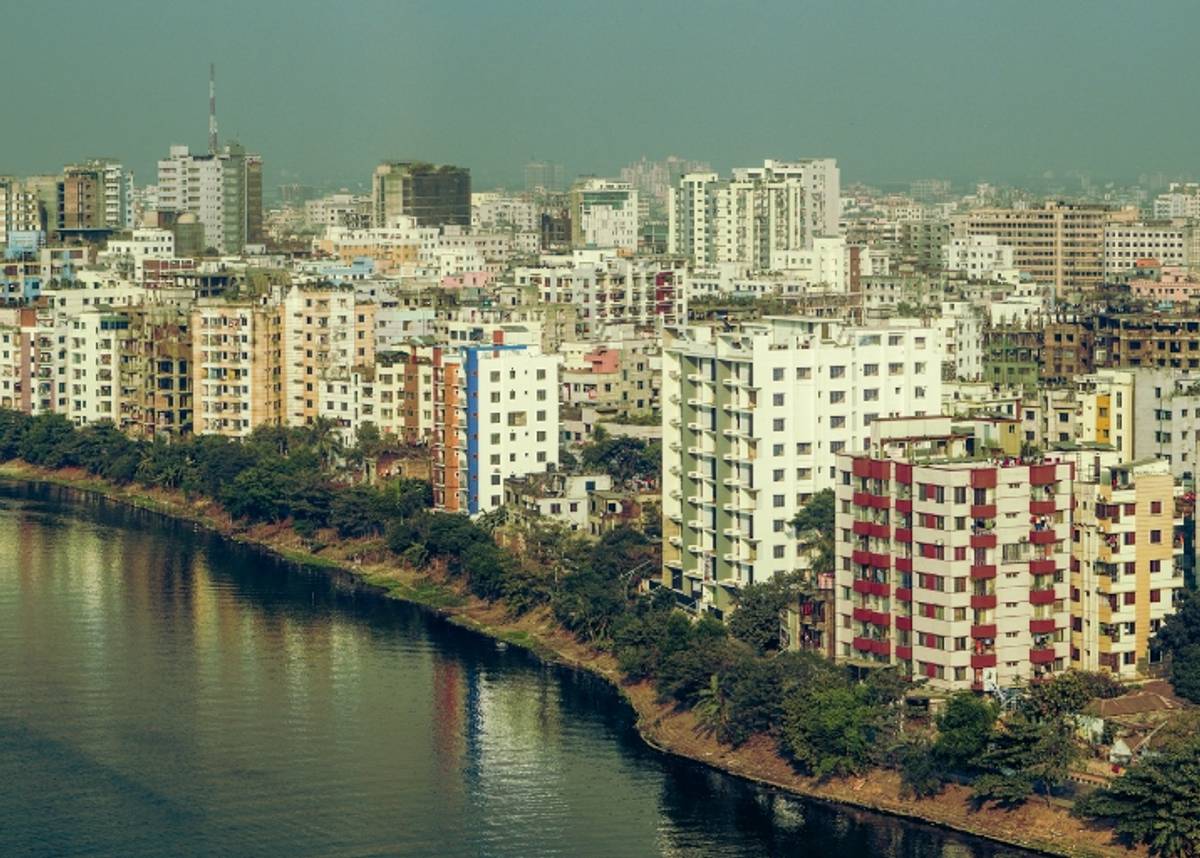
Air pollution costs Bangladeshis 5.5 years of life: AQLI report
The average Bangladeshi people could live 5.5 years longer if particulate pollution (PM2.5) met the World Health Organization (WHO) guideline of 5 µg/m, said a new report on Thursday.
In the most polluted areas of Bangladesh, such as the Gazipur, Narayanganj, and Dhaka districts, people could gain more than 6.5 years of life expectancy, according to new data from the Air Quality Life Index (AQLI).
Air pollution is the greatest external threat to life expectancy in Bangladesh, it said.
All of Bangladesh’s 166.8 million people live in areas where the annual average particulate pollution level exceeds both the WHO guideline and the country’s national standard of 35 µg/m.
Even in the least polluted district of Lalmonirhat, particulate pollution is 7 times the WHO guideline.
Between 1998 and 2023, particulate concentrations in Bangladesh increased by 66.2 percent, further reducing life expectancy by 2.4 years.
In the most polluted divisions in the country—Dhaka and Chittagong—76.2 million residents or 45.6 percent of Bangladesh’s population could potentially gain 6.2 years of life expectancy if particulate concentrations were reduced to meet the WHO guideline.
In Dhaka—the most populous district in Bangladesh—an average resident could potentially gain 6.9 years of life expectancy if air quality met the WHO guideline while Chittagong—the country’s second most populous district—residents would gain 6.2 years.
If pollution levels in Dhaka and Chittagong met Bangladesh’s national standard, life expectancy in these districts would still increase by 4.1 and 3.3 years, respectively.
All annual average PM2.5 values (measured in micrograms per cubic meter: µg/m) are population weighted and exclude the dust fraction from natural dust and sea-salt.