Wildfires are reversing Canada's progress on improving air quality
By Nicole Mortillaro
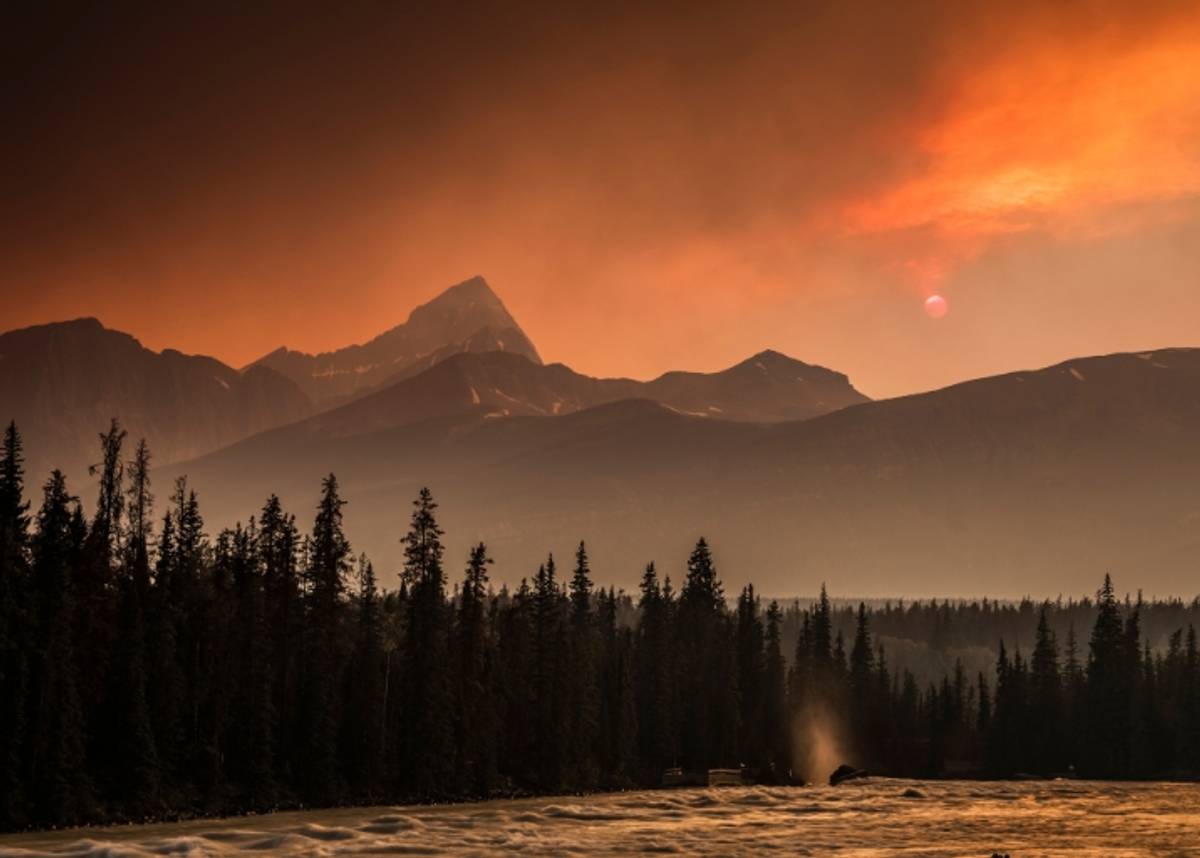
It's hard not to forget the 2023 Canadian wildfire season, when more than 16 million hectares of forest were lost , thousands were displaced and smoke suffocated cities across both Canada and the U.S.
And it turns out Canada experienced its worst air pollution levels that year since 1998, according to a new report released today by the University of Chicago's Air Quality Life Index (AQLI). At the same time, the report found that pollution levels didn't change much for the rest of the world in 2023.
If those levels continued for a person's lifetime, the average Canadian would lose roughly two years of their life expectancy, according to the report.
Efforts have been made around the world, including in Canada, to curb harmful emissions of fine particulate matter with a diameter of less than 2.5 micrometres, also known as PM 2.5. But wildfires are reversing those advances — with serious health consequences.
"Air pollution is the greatest external threat to human well-being on the planet, and I don't believe that that is widely recognized," said Michael Greenstone, one of the report's authors. "More years of life expectancy are lost for the average person on the planet due to air pollution than to maternal and child malnutrition, than due to alcohol, than due to tobacco."
Canada's national standard is 8.8 micrograms of PM 2.5 per cubic metre; the World Health Organization's standard is five. In 2023, Canadians were exposed to 9.2 micrograms per square metre, or 1.5 times 2022 levels. And more than half of Canadians breathed air that surpassed that national standard.
Greenstone said that both Canada and the U.S. have made great strides over the past few decades to curb air pollution, particularly by mandating the installation of control devices to reduce pollution from the combustion of fossil fuels. But he says it's frustrating to see it rise as it did in 2023.
"What's really interesting about the reversals in Canada and the United States is they're showing that air pollution is like the zombie that we thought we had killed, but it's coming back to life."